The Pre-Launch Naming Runbook
Every founder we talk to makes the same mistake: they fall in love with a name before they run the checks. Then they spend a week mourning the trademark conflict, the unavailable handle, or the colleague who points out, too gently, that the name sounds like a German tax form.
You don't need to be a branding agency to avoid this. You need a runbook.
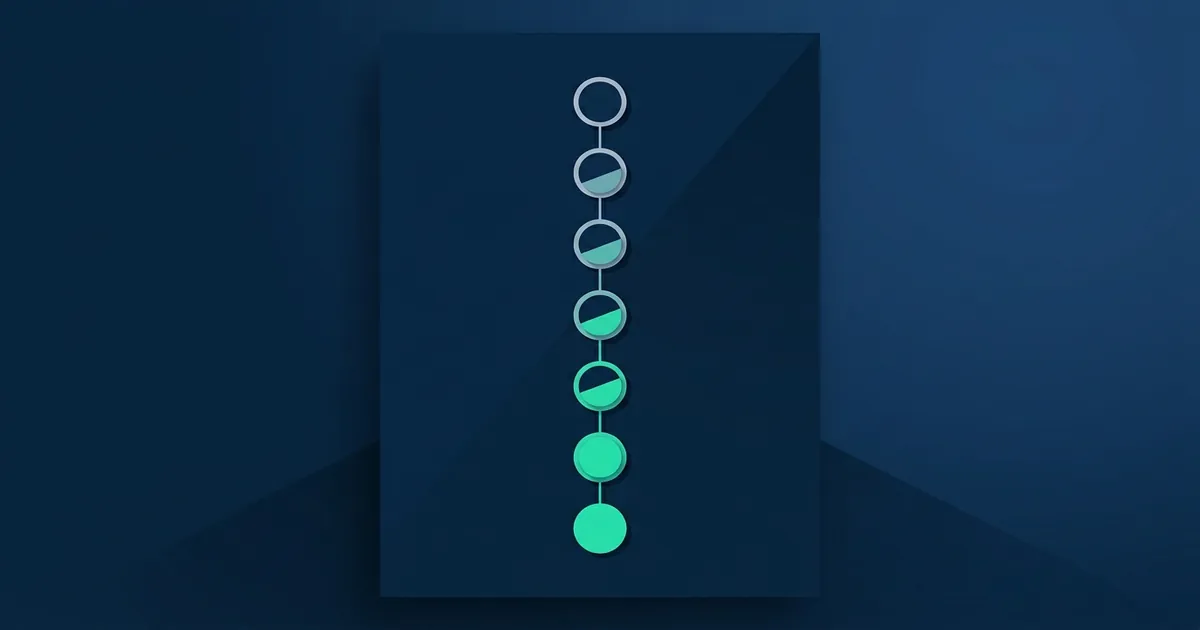
This is ours. Seven steps, in order. Run them every time you're naming a new product, a side project, or a whole company. The first time it takes a weekend. The fifth time it takes ninety minutes.
Why "Order of Operations" Matters in Naming
The reason founders get stuck is almost always the same: they reverse step five and step one. They register the .com first, then try to figure out if the name actually works.
That's expensive. A premium domain costs five figures. A rebrand six months in costs the same, but in trust, SEO, and team morale. The runbook below is engineered so that the cheap steps come first and the irreversible ones come last.
Here it is at a glance, we'll go deep on each one.
- Define the shape, what kind of name do you actually need?
- Generate broadly, fast, machine-assisted, no filtering yet
- First-pass cull, gut filter to a shortlist of fifteen
- The five-second test, does the name survive a hostile audience?
- Availability sweep, domain, social, basic registry
- Trademark clearance, the step everyone wants to skip
- The 24-hour cooldown, the only step that protects you from yourself
Step 1: Define the Shape
Before any name appears on a list, decide what kind of name you're hunting. Names come in roughly five flavours, and they cost very different amounts of effort to clear:
- Descriptive, DropBox, PayPal. Easy to understand, hard to trademark, easy to lose to a competitor with a better budget. Avoid for anything you plan to scale.
- Suggestive, Slack, Stripe. Evokes a feeling without explaining the product. The sweet spot for most startups.
- Invented / coined, Kodak, Spotify, Nymly. Distinctive, easy to clear legally, but you pay in early-stage explanation cost. Worth it.
- Founder / arbitrary, Tesla, Disney. Real-word names borrowed from somewhere unrelated. Very strong trademark posture if you can land one.
- Acronym, IBM, KFC. Almost always emerges after a brand has scaled. Don't start here.
Pick a target flavour before you start generating. If you don't, you'll generate ten descriptive names, three coined names, and one acronym, and you'll have no consistent shortlist to compare.
For most founders shipping a product in 2026, suggestive or coined is the right answer.
Step 2: Generate Broadly
This is the step founders do badly because they self-censor in real time. Don't. The job of step two is quantity, not quality. Aim for 150 to 300 raw candidates.
Three good sources, used together:
- An AI naming tool (we built Nymly for exactly this, it generates and checks domain plus social availability in one pass). Run it three or four times with different briefs. If you are still choosing a tool, see how the main options stack up in our best AI business name generators roundup.
- Manual brainstorming with the seed words from your category, your differentiators, and your feeling. Don't write full names, write fragments. Roots, prefixes, suffixes, vowel sounds.
- A thesaurus + a foreign-language dictionary. Look up your category words in Latin, Greek, Japanese. Half the great tech brand names of the last decade have a foreign-language root.
Do not check availability while generating. It contaminates the brainstorm.
Step 3: First-Pass Cull
Open your list and cut ruthlessly to fifteen names. Use these filters, in this order:
- Can I say it once and have someone spell it correctly? If no, cut.
- Does it sound like anything embarrassing in English or Spanish? Quick Google for both. Cut if yes.
- Is it more than three syllables? Cut, unless it's exceptional.
- Does it sound like an existing big brand? Cut, you don't want the trademark fight or the confusion.
- Does it make me feel something? Borderline names get one more pass on this filter.
You should now have fifteen names. If you have more than thirty after these filters, your bar is too low. Cut more.
Step 4: The Five-Second Test
Pick five people who are not your co-founder, family, or designer. Show each one your shortlist of fifteen names only, no logo, no description, no context. Ask one question:
"What do you think this company does?"
You'll learn three things instantly:
- Which names land. If three out of five people guess somewhere near your category, the name carries meaning.
- Which names mean the wrong thing. A name that everyone thinks is a dating app when you're building accounting software is dead.
- Which names are completely opaque. That's okay for coined names, Nymly doesn't mean anything until you explain it, but it's not okay for suggestive names.
Cut your fifteen to five.
Step 5: Availability Sweep
This is the step where dreams die at scale. Brace yourself.
For each of your five finalists, check:
- Domain. The
.comis still the gold standard. If it's available, register it on the spot, they go in hours. If the.comis gone, you've got a real decision: stretch budget to buy it on the secondary market (often five-figure), pick a strong alternative TLD (.io,.ai,.co,.app), or move to the next name. See our domain availability guide for the trade-offs. - Social handles. Instagram, X, TikTok, YouTube, LinkedIn. You want the same handle across all of them, and you want it to match the domain. Inconsistency erodes trust, we go deep on this in social media branding.
- App store names. If you'll ever ship a mobile app, the iOS App Store and Google Play namespace matter.
- GitHub organisation. If you're a dev tool, this is non-negotiable.
Tools matter here. Checking eleven platforms by hand for five names is fifty-five tab switches and an hour of your life. Nymly checks all of this in one pass, that's literally why we built it.
After step five, you probably have two or three viable finalists. Sometimes one. That's normal.
Step 6: Trademark Clearance
This is the step every founder wants to skip and every founder regrets skipping. The good news: a basic clearance is free and takes twenty minutes per name.
The minimum sweep:
- USPTO TESS (tmsearch.uspto.gov), search for your exact mark and obvious phonetic equivalents. Filter by your International Class (most software is Class 9 and Class 42).
- EUIPO and WIPO if you'll operate outside the US. The European Union Intellectual Property Office and World Intellectual Property Organisation databases.
- Common-law search, a careful Google for the exact name plus "trademark", plus your industry. Common-law rights aren't registered but they exist.
- Domain history, has someone owned this domain in the past, and if so, for what? Use the Wayback Machine.
You're looking for two things: identical marks in the same class, and confusingly similar marks in any related class. Confusingly similar is a judgement call. If the search shows a name that's one phoneme off in a class that touches your industry, treat it as a "no".
If you have any real money on the line, hire a trademark attorney for two hours at the end of this step. They will catch what you missed, and it costs less than a single rebrand decision later.
A note on AI-assisted name generation: the names that feel cleverest are often the names that are most likely to be rejected as descriptive. We dig into that pattern in AI Named Your Startup. Now the USPTO Rejected It.
Step 7: The 24-Hour Cooldown
You have one or two finalists. Pick a favourite. Then do nothing for twenty-four hours.
This step exists because every founder we know has, at some point, registered a domain at 11pm and woken up the next morning wishing they hadn't. Excitement and tunnel-vision feel identical at midnight.
In the cooldown, do these three things:
- Sleep on it. Literally. If the name still excites you in the morning, it's strong.
- Say it out loud on a phone call. "Hi, this is Anna from [name]." If it stumbles, you'll feel it.
- Run a final imposter scan. Search the name plus "scam", "review", "alternative", "down". You're looking for negative associations a search engine has already crystallised.
If after twenty-four hours the name still feels right, register the domain, lock down the handles, and start building. The runbook is done.
What Comes After the Runbook
The runbook ends the moment the domain is registered. What starts the moment after is the actual work, building a product worth a great name. The name is leverage; it's never the product.
A few follow-ups worth queueing for the week after launch:
- File an Intent-to-Use trademark application with the USPTO. It locks your priority date the moment you submit, and you have up to three years to demonstrate use in commerce.
- Set up brand monitoring. Google Alerts on your exact name. Set them up in week one, not year three.
- Build the brand asset folder. Logo, wordmark, primary colour, secondary colour, two fonts. Even the rough version. Future-you will thank present-you.
The Shortest Version of the Runbook
If you remember nothing else, remember the order:
1. Shape → 2. Generate → 3. Cull → 4. Five-second test → 5. Availability → 6. Trademark → 7. Cooldown.
Skip a step and you'll pay for it. Run them in order and the worst case is you end up with a defensible, available, distinctive name, and you'll have done it in a weekend.
Want to compress steps 2 and 5 into a single pass? That's literally what Nymly was built for. Generate, domain-check, and social-check in one workflow. The runbook still applies, Nymly just makes the longest step the fastest.
Related Articles
Naming for the AI-Era Indie Hacker: 5 Patterns From Cursor, Lovable, and v0
Cursor, Lovable, v0, Replit, Arc, Linear. The 2026 indie aesthetic does not sound like SaaS, it sounds human. Five patterns to steal in 2026.

Is .io Going Away? And Should Your Startup Pick .ai Instead?
Is .io going away? What ICANN's rules say, where the Chagos treaty stands, .ai's 2026 price rise, and what funded startups pick, all with sources and dates.

Nymly Is Now a Chat: What Changed and What Stayed the Same
Nymly is now a chat. Describe your idea, refine names by talking back, see .com availability beside every name, and pay for what you use, not credit packs.
← All Blog Articles
Browse our complete collection of branding and naming resources.
View Pricing
Choose the plan that works best for your business.
Ready to find your perfect brand name?
Generate names with instant domain and social media availability checks. Stop guessing and start building.
Start Generating Names →